

After We Got Him
Fifteen years after Bin Laden got whacked, what I wish I had told the reporters

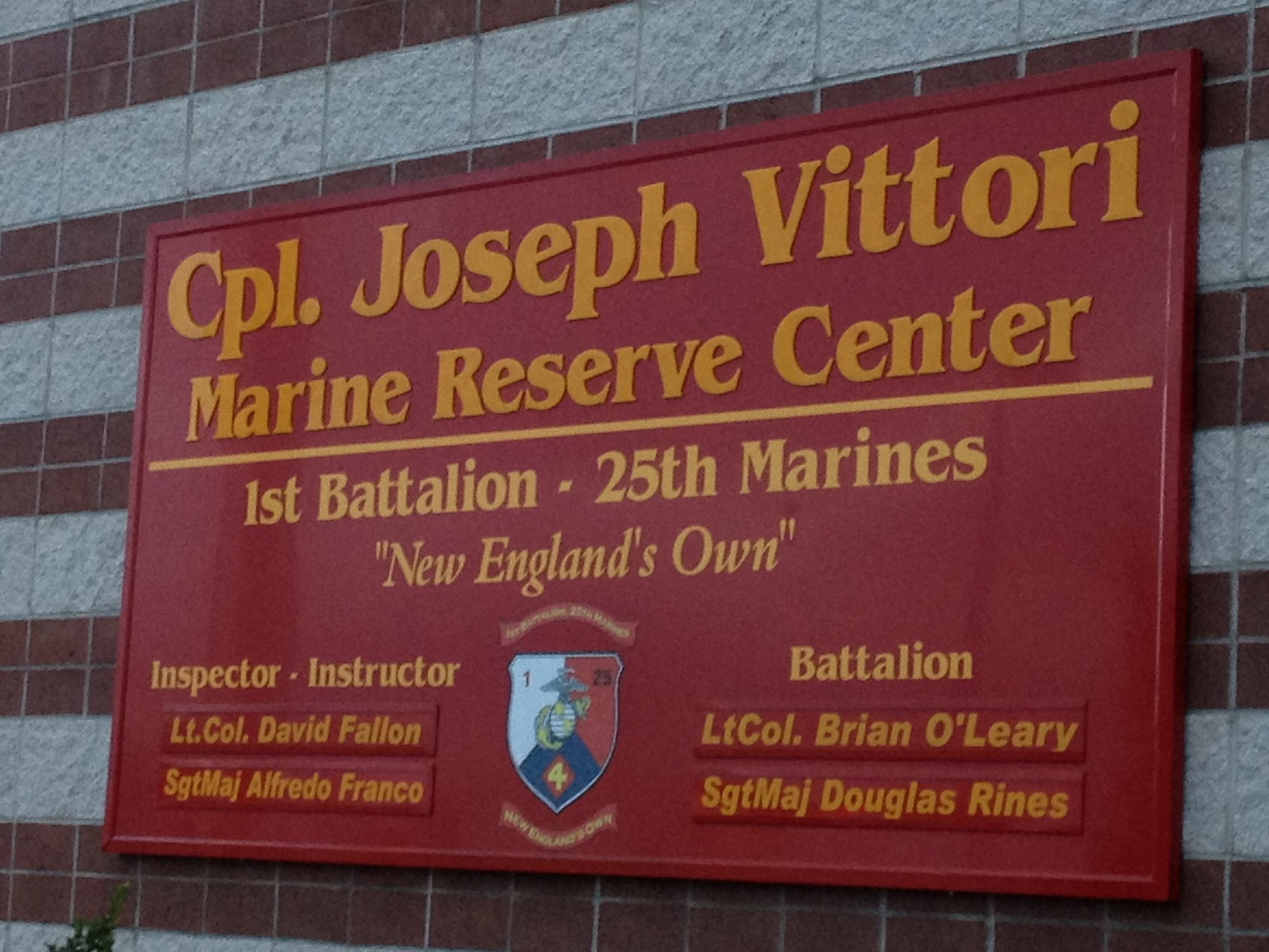
Fifteen years ago, this weekend, on the night of Sunday, May 1, 2011, I was sitting in my office at my battalion’s headquarters at Fort Devens, Massachusetts. My orders had taken effect that morning. The Marines of my reserve infantry unit, 1st Battalion, 25th Marines, would begin reporting the following morning. We were activating for a long-anticipated deployment to Afghanistan.
After a 20-year career that had included active duty, a couple of combat deployments, and years of drill weekends and two-week training exercises, I was about to command an infantry battalion in a combat zone. As far as I was concerned, I was headed to the Major Leagues.
Our chaplain, Father Ed Gorman, had been watching the news in the building’s TV room. He came across the hall to my office at a little after 11:35 p.m. and said four words I’ll never forget.
“Sir, we got him.”
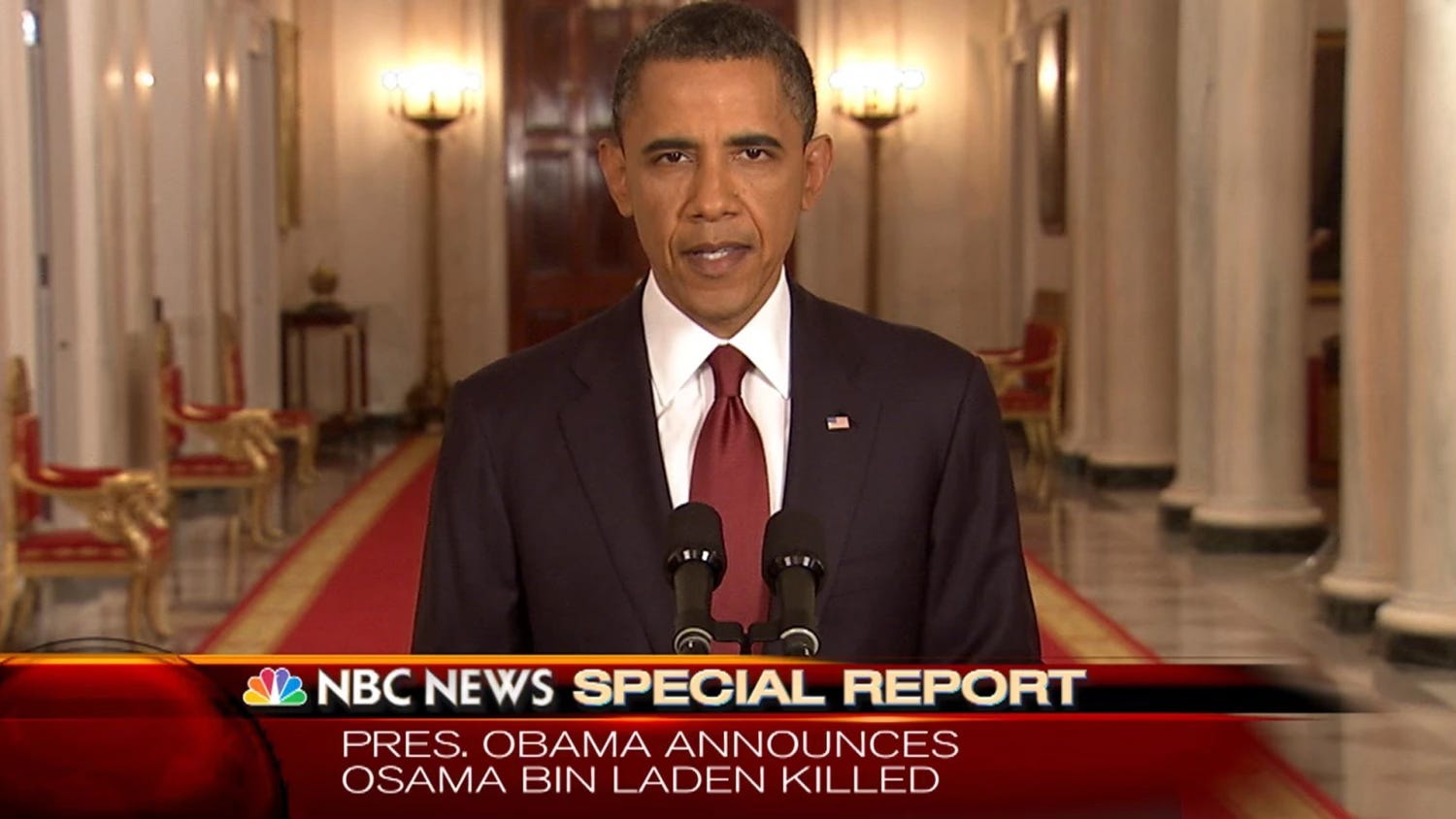
President Obama had just told the country that a small team of American special operators had killed Osama bin Laden in a compound in Abbottabad, Pakistan. The animal who’d murdered nearly 3,000 of our countrymen on a clear Tuesday morning was dead. Father Ed and I hugged, shook hands, and exchanged a variety of ooh-rahs.
On Pennsylvania Avenue, crowds were celebrating outside the White House gates. At an airfield in Jalalabad, the SEALs who had just successfully carried out Operation Neptune Spear were unloading a body. And, in my office at Fort Devens, I was getting ready to go to war.
Throngs of reporters arrived the next morning. Boston television crews and newspaper correspondents descended on Fort Devens to ask my Marines and me what the killing of Bin Laden meant for our deployment. More than one of them put it to me directly: did this change anything?
I told them no, that even with Al Qaeda’s leadership eliminated, its host, the Taliban, was still operational, as was the Haqqani Network. I insisted that our mission was unchanged and that the men who were still targeting Americans had to be hunted down and finished. I said it more than once, to more than one reporter.
I can’t recall just how much I was forcing myself to believe what I was saying. However, as I was about to lead 900 Marines into a war that —for better or worse— I still very much wanted to fight, I made myself believe it.
Sorry for the delay, but fifteen years later, I just wanted to set the record straight and tell you I was wrong.
* * *
Once Bin Laden was dead, the United States no longer had a compelling national security interest in Afghanistan. The Authorization for Use of Military Force (AUMF) that Congress passed on September 18, 2001, was directed at the people who planned, authorized, committed, or aided the September 11 attacks. That meant Al Qaeda, and it meant Bin Laden personally.
By May 2011, Al Qaeda’s core had been gutted by a decade of drone strikes and special operations raids. The CIA’s own estimate at the time was that fewer than one hundred Al Qaeda fighters remained inside Afghanistan. In fact, as early as the previous June, CIA director Leon Panetta told ABC’s Jake Tapper, “I think at most, we’re looking at maybe 50 to 100, maybe less,” adding, “that the main location of Al Qaeda is in tribal areas of Pakistan.”
The men that our forces would target for the next ten years — the Taliban, the Haqqanis — were Afghan and Pakistani actors who harbored strictly regional ambitions. They hadn’t attacked America, and they weren’t the entity Congress sent us to destroy.
The mission Congress authorized was complete on the night of May 1. Everything that followed was because, strangely, it seemed like nobody wanted to admit that we’d succeeded.
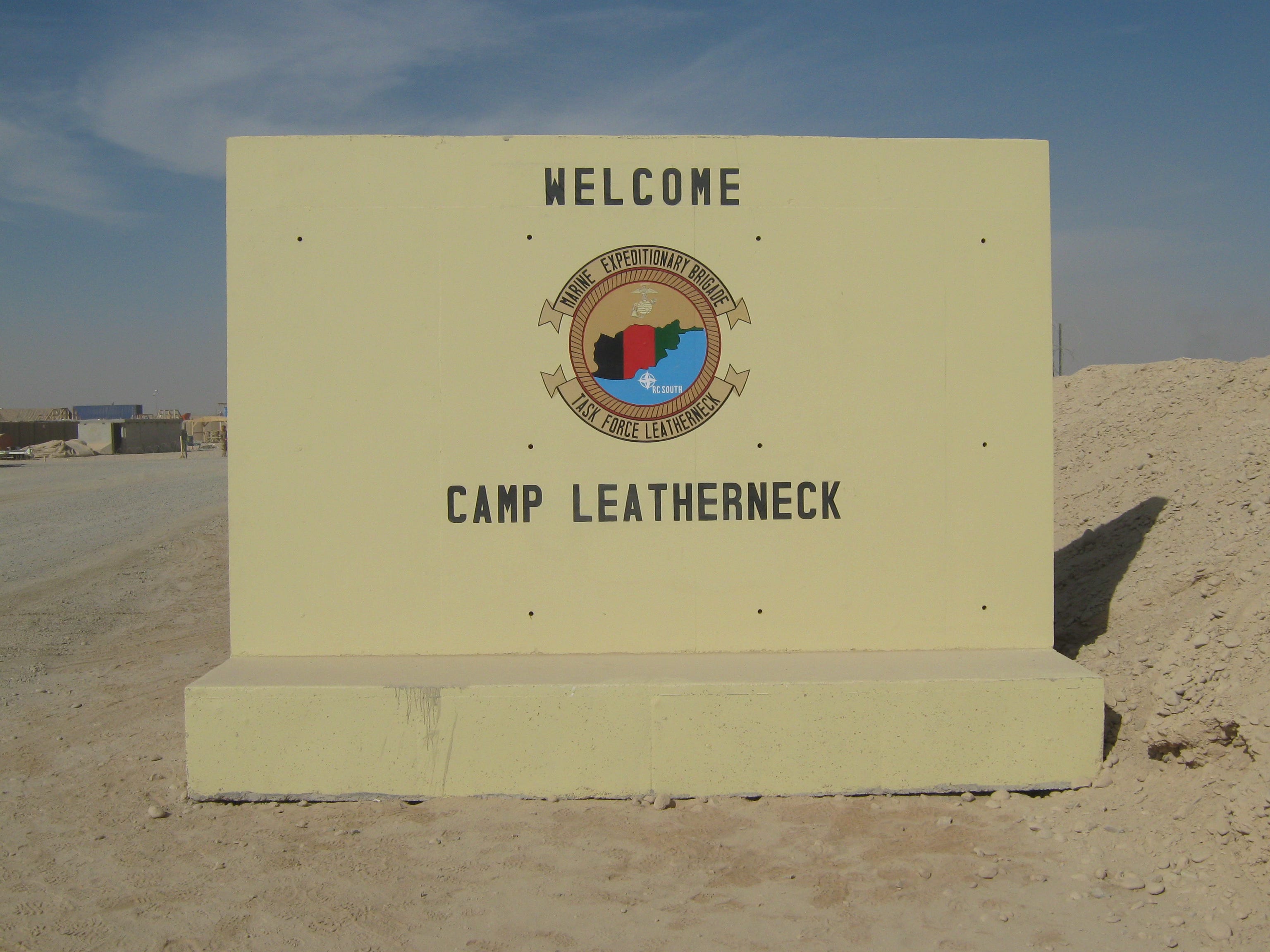
My battalion landed in Afghanistan in August 2011. Most of us were stationed at Camp Leatherneck, part of the sprawling Bastion-Leatherneck-Shorbak complex in Helmand Province, where we were on the receiving end of rocket and mortar fire pretty much daily.
The bulk of our actual mission was making nice with local power brokers and handing them extraordinary sums of American cash to build things. Marines on patrol weren’t allowed to confiscate the poppy or the heroin they encountered. That was the job of the Counternarcotics Police of Afghanistan, an agency whose officers were, in the best cases, too poorly resourced and too politically constrained to enforce anything. In the worst cases, they were on the payroll of the people we were sent there to fight.
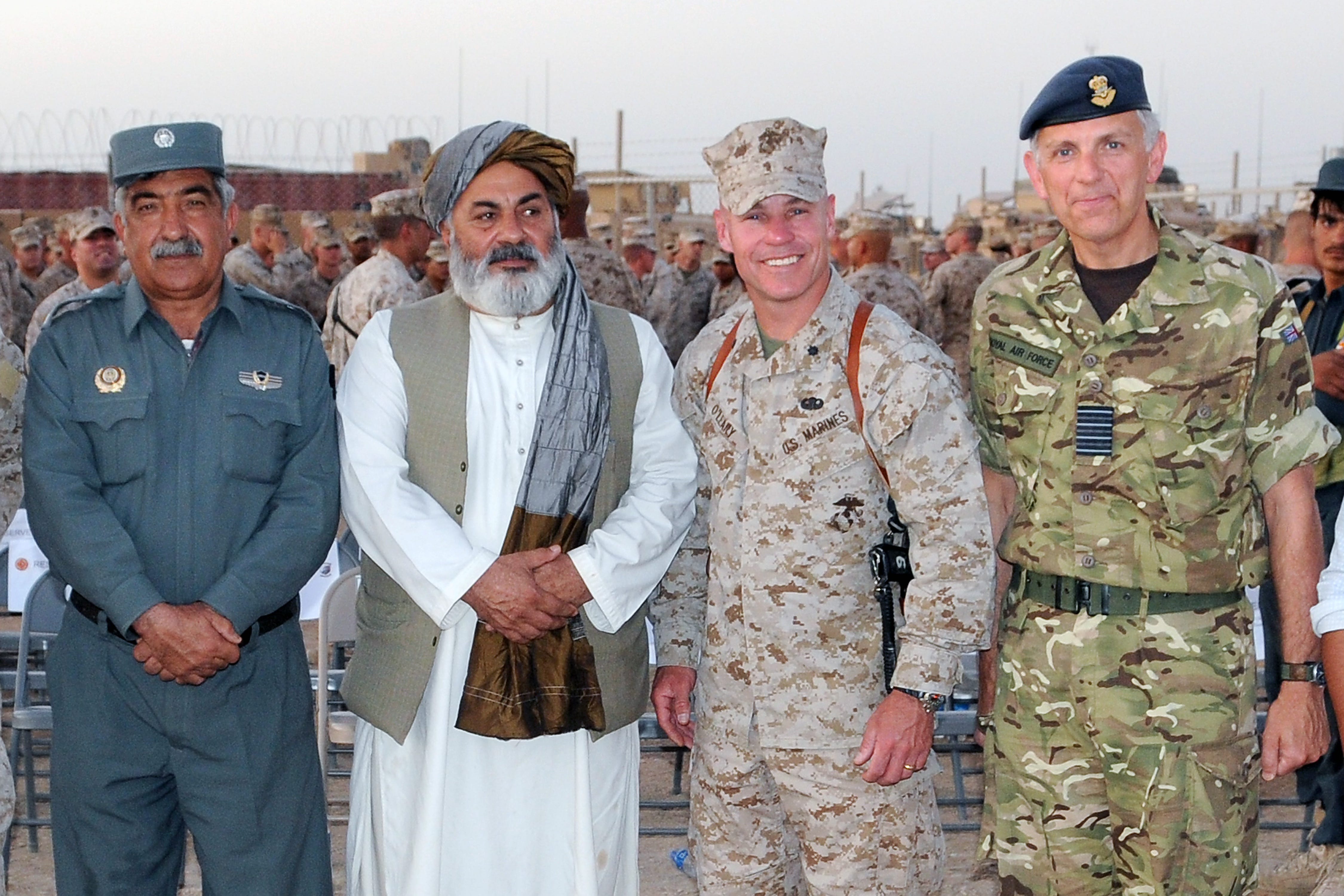
Back in December 2009, during a speech at West Point, President Obama had announced a surge of 33,000 troops that would take place at “the fastest possible pace.”
Then, in that same speech, he declared that “after 18 months, our troops will begin to come home,” and set July 2011 as the beginning of the drawdown.
The Taliban heard the second part loud and clear, and they responded the way any patient enemy responds to a public timeline — they waited us out. By the time my Marines were taking incoming on Leatherneck, the war was, in a sense, already over. It’s just that the fighting wasn’t.
On Thanksgiving weekend of 2011, my commanding officer called me and my XO to his office to inform us that we’d be redeploying by the end of the year, well ahead of our March 2012 timeline.
I was genuinely incredulous and at least a little (more like a lot) disappointed.
“Sir,” I said. “We’ve got a shit-ton of balls in the air right now.”
“It doesn’t matter, Brian,” he replied. “You’re outta here by New Year’s.”
It turned out that, over the previous couple of days, the number crunchers up in Kabul had figured out that the troop count currently tagged for redeployment wouldn’t be enough to meet President Obama’s reduction target. And, as all of this was on the eve of an election year, the decision-makers chose to off-ramp arbitrary numbers of units and troops across the services.
The following week, one of my Marines, 25-year-old Corporal Greg Caron, was clearing the last room of the last house in a compound his squad was sweeping for weapons and contraband. He turned to a fellow Marine and said, “Hey, shine that light over here. I think I see something.” He then took one more step.
A mason jar IED that the mine detectors had missed took both of his legs below the knee.
I can’t miss the chance to tell you that, six months to the day after suffering that life-changing, catastrophic injury, Marine Corporal Greg Caron finished eighth in the wheelchair division of the Boston Marathon.
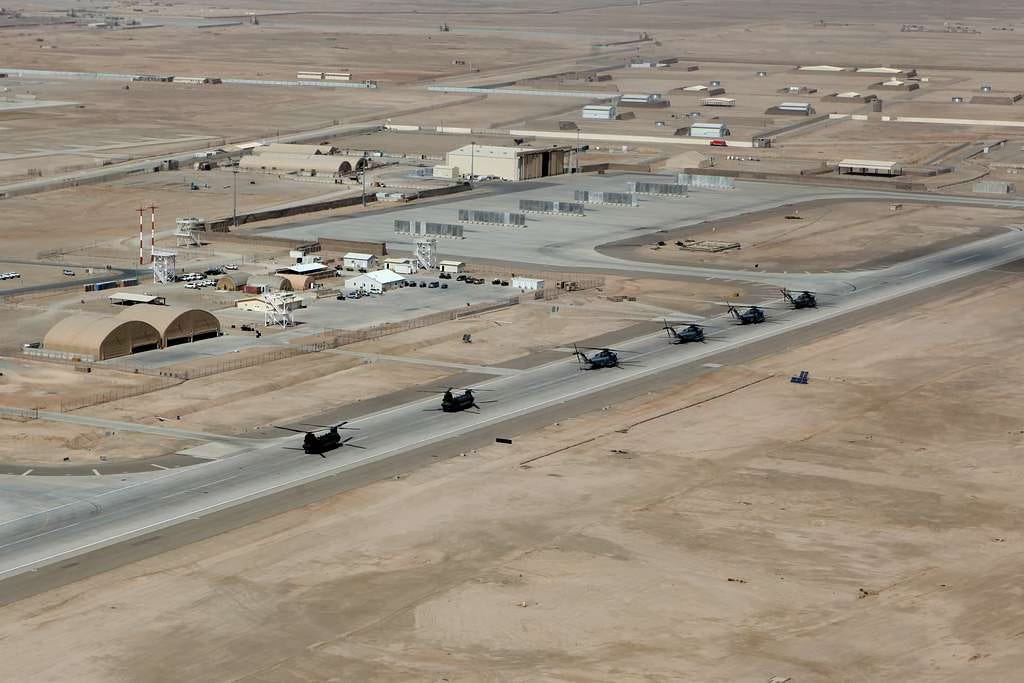
My battalion took off from the airfield on Camp Bastion on Christmas Day, and my trip to the Majors was over.
* * *
Here is what I now know that I didn’t know when I was talking to those reporters at Fort Devens.
Of the 2,459 American service members killed in the Afghanistan war between October 2001 and August 2021, roughly 900 of them were killed after Osama bin Laden was already dead. The two deadliest years of the entire twenty-year war were 2010 and 2011, the years straddling the Abbottabad raid.
Of the more than 20,000 Americans wounded in action in Afghanistan, the great majority were wounded after the man we went there to kill was at the bottom of the North Arabian Sea.
IEDs, like the one that took Cpl. Caron’s legs accounted for 45 percent of all American deaths in Afghanistan, and the IED death toll peaked between 2011 and 2012.
On August 6, 2011 — three months after Bin Laden was killed — a CH-47D Chinook, call sign Extortion 17, was shot down by a Taliban RPG in the Tangi Valley of Wardak Province. All 38 aboard were killed, among them 17 Navy SEALS, 15 of whom were from the same command that had carried out Neptune Spear.
The downing of Extortion 17 was the single greatest loss of American life of the entire Afghanistan campaign, and it took place three months after Bin Laden was dead.
On September 10, 2011, a Haqqani suicide bomber detonated a massive truck bomb at Combat Outpost Sayed Abad, also in Wardak, wounding 77 American service members and killing five Afghans. It was one of the largest single vehicle-borne IED attacks against U.S. forces of the entire war.
By August 2012, “Green-on-Blue” attacks by Afghan soldiers and police had become the leading cause of NATO troop deaths, directly undermining the entire train-and-advise strategy that had been the cornerstone of our exit timeline since 2009.
On the night of September 14, 2012, fifteen Taliban fighters wearing U.S. Army uniforms and carrying AK-47s, RPGs, and suicide vests breached the perimeter of the place I’d called home just nine months earlier, the Bastion-Leatherneck-Shorabak complex. Once inside, the insurgents executed one of the most destructive attacks of the entire war.
The assault force split into three teams and went after the British-run airfield at Bastion, where they destroyed six Harrier jump jets belonging to Marine Attack Squadron 211 and severely damaged two more. They also destroyed three refueling stations and damaged six aircraft hangars before being killed in a roughly four-hour firefight.
The squadron’s commander, LtCol. Christopher Raible, and Sgt. Bradly Atwell were killed in the attack. Nine others were wounded.
The financial cost of the destroyed aircraft alone exceeded $200 million, making it the worst single-incident loss of U.S. military aircraft since the Vietnam War.
* * *
Imagine the alternative. Imagine that on the night of May 1, 2011, instead of telling the country that the war would continue, President Obama had announced that the mission Congress authorized in September 2001 had been accomplished and was now complete. Imagine that over the following twelve to eighteen months, American conventional forces withdrew from Afghanistan in an orderly, planned, conditions-based sequence, covered by airpower and a small residual counterterrorism footprint.
No, I probably wouldn’t have gotten my shot at the Big Leagues.
But many of the roughly 900 American service members who died after May 2, 2011, would still be with us. Many thousands of the post-2011 wounded would have come home whole. Extortion 17 would never have flown that mission. Greg Caron would still have his legs.
And the thirteen Marines, Sailors, and Soldiers who were killed at Abbey Gate during the chaotic August 2021 evacuation wouldn’t have been at that gate, because there wouldn’t have been a panicked, eleventh-hour evacuation to defend.
President Obama set a withdrawal timeline and walked it back. President Trump signed the Doha Agreement, which was a complete mess to begin with, and even then, he slow-rolled it. From 2011 on, every president knew the war couldn’t be won on terms acceptable to the American voter, and every one of them just punted it to the next one’s desk.
* * *
I’m writing this on the fifteenth anniversary of the killing of Osama bin Laden, and I’m writing it because I want to say something I didn’t have the wisdom or honesty or courage to say to those Boston reporters in 2011. The death of Bin Laden should have been the period at the end of a sentence. Instead, it became just a comma.
The cost of that punctuation error was 900 American lives, tens of thousands of wounds, both physical and moral, more than a trillion dollars, the legs of one of my Marines, and the slow, undignified collapse of a project we’d convinced ourselves was noble.
I went to Afghanistan thinking I was going to the Major Leagues. I came home realizing that my Marines and I had been treated as political pawns in a war whose original justification had already been satisfied before we ever boarded the plane.
When Father Ed came to my office that night was right, we got him.
The tragedy is that we didn’t know what to do next.
Read more of Danger Close with Brian O’Leary at brianoleary.substack.com
Brian O’Leary is a retired Marine Corps colonel who served for 30 years, including combat deployments to Somalia and Iraq, and command of an infantry battalion in Afghanistan. Additionally, he has spent 25 years in the financial services industry. Brian earned his BA in English from Penn State University and his MA in National Security Studies from the US Army War College.
Painfully brilliant writing and awareness.