

Four Days in July
The 1863 New York City Draft Riots

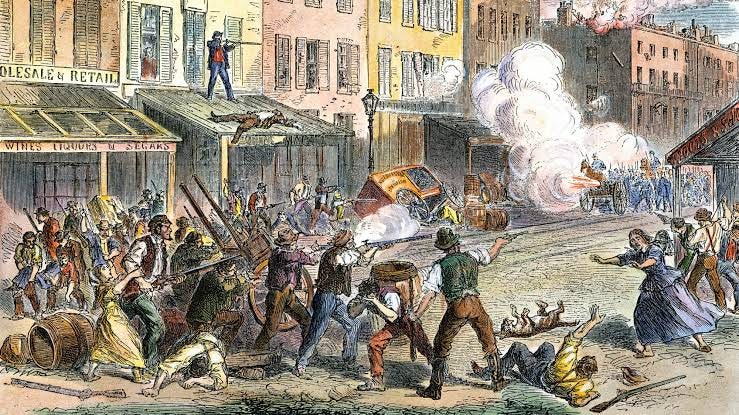
On the afternoon of July 17, 1863, Archbishop John Hughes stepped onto the balcony of his New York City residence to address an audience of 4,000, mostly men and boys, gathered along Madison Avenue. Though he appeared precisely on schedule, at two o’clock, he may yet have been a few days late.
Over the previous four days, in the sweltering mid-July heat, the city was consumed by what remains, aside from the Civil War itself, the largest domestic insurrection in American history.
From July 13th to the 16th, mobs numbering in the tens of thousands looted businesses, burned buildings and assaulted police and soldiers. They then turned on the city’s Black residents, hunting them down and murdering them in the streets. By the time troops recalled from the Gettysburg campaign arrived to help restore order, the city had suffered roughly 120 deaths and property damage running into the millions.
The Lead-Up
As Southern States began leaving the Union in December 1860 —seven before the guns opened on Fort Sumter, and four more after— trade with the North began to unravel. Lincoln’s naval blockade of the Southern coast, part of the larger “Anaconda Plan,” was meant to strangle the Confederacy by cutting off its agricultural exports, as well as its imports of manufactured goods and war supplies. That July, Congress passed the Nonintercourse Act, interdicting all commercial trade with the rebellious states.
Keep reading with a 7-day free trial
Subscribe to Danger Close with Brian O'Leary to keep reading this post and get 7 days of free access to the full post archives.